

Introduction: The Search for Something Real
When an AI scandal or geopolitical shock changes investors’ expectations overnight, real estate offers something concrete to evaluate: a property’s usefulness and the income it produces. The International Monetary Fund’s October 2026 outlook identifies conflict and renewed trade tensions alongside shifting AI expectations as threats to growth, with inflation adding uncertainty.
Real estate investment management firms such as Buchanan Street Partners operate in a market grounded in everyday needs: places to live, work, and store goods. When prices move faster than underlying earnings justify, investors can still examine a property’s occupancy, rent and expenses. Its physical substance alone cannot ensure a sound investment.
A World of Compounding Uncertainty
Technological disruption complicates forecasts of future earnings. The IMF also warns that heavy reliance on AI leaves markets vulnerable if investment or profitability disappoints. When a few large companies dominate an index, their setbacks can spread across portfolios. Changing inflation expectations and monetary policy also affect borrowing costs and valuations.
Together, these forces complicate forecasting and can trigger abrupt repricing. Investors can respond by examining how reliably an asset earns income and how much they could lose.
What Makes an Asset “Hard”
Hard assets are tangible investments with intrinsic economic utility. Real estate, infrastructure, land, and commodities all fall into this category because their value is tied, at least in part, to something physical and useful.
Consider an industrial property. Its value reflects not only the income it can generate from tenants, but also the land it occupies, the materials and labor required to build it, and the utility it provides to businesses that need storage, manufacturing, or distribution space.
That physical foundation distinguishes real estate from purely financial assets. Like stocks and bonds, real estate is valued partly on expectations of future cash flows. But it is also supported by an underlying asset with a measurable replacement cost. When the cost to build new properties rises materially above the price of existing ones, new supply can become harder to justify, potentially supporting the value of well-located existing assets.
Investors can access real estate in many forms, from direct ownership of homes and rental properties to REITs, private funds, limited partnerships, and other pooled investment vehicles.
Income That Doesn’t Depend on Sentiment

A leased property can produce regular rental income while its estimated sale value fluctuates. Real estate lenders instead earn interest on property financing.
Leases establish tenant payment obligations; loan agreements set repayment schedules and protections. Those contracts make future cash flow easier to assess, reducing reliance on a buyer eventually paying more.
An occupied apartment building may continue collecting rent through a downturn, although vacancies, repairs and defaults can reduce what reaches its owners. Evaluating tenant finances and lease expirations helps distinguish dependable payments from optimistic projections.
Inflation, Replacement Cost, and Long-Term Value
Real estate has historically attracted investors in part because rents and property values can adjust as prices rise. Rent increases at renewal or through contractual escalations can help offset higher operating costs, although the relationship is not automatic. A 2024 review by INREV, a European real estate investment association, describes a variable and partial inflation hedge with results depending on property type, lease structure and market conditions.
Inflation can also affect real estate through replacement cost. Rising land, labor and material costs can make new construction less feasible, supporting existing buildings’ competitive position. Scarce land, lengthy entitlement processes, and planning restrictions can reinforce that dynamic.
Over long periods, this can create an important source of value. An existing property represents not only a stream of rental income, but also something that may become progressively more expensive to recreate. For well-located properties with durable tenant demand, rising replacement costs can therefore help support both rents and asset values over time.
There are limits. Replacement cost cannot create demand where none exists, and higher expenses can eat into rent growth. Its protective effect is strongest when high replacement costs and constrained supply meet persistent demand for the underlying real estate.
Durable Demand Drivers
Housing demand follows population changes and household formation, but affordability determines what people can pay. Harvard’s 2026 housing report documents affordable units in short supply alongside slowing household growth.
“Many young adults simply cannot afford to form their own households and are instead doubling up or living with family,” said Daniel McCue, a senior research associate at Harvard’s Joint Center for Housing Studies, in the report’s assessment of housing demand.
E-commerce creates a need for storage and distribution, but access to transportation and customers helps determine which warehouses attract tenants. Offices and shops likewise need locations suited to their users.
Local affordability and tenant needs determine whether broader trends translate into demand for a particular property. A housing shortage does not guarantee demand for expensive apartments, and a growing logistics market cannot make every warehouse competitive.
Hard Assets Are Not Risk-Free
The Federal Reserve’s April 2025 stability report documented significant declines during 2022–2023 in inflation-adjusted commercial property prices, with offices experiencing the largest declines.
Several risks deserve attention:
- Higher interest rates can increase refinancing costs and pressure valuations.
- Borrowing magnifies losses as well as gains.
- Direct property holdings can take time to sell.
- Private valuations can lag changing conditions.
The SEC warns that periodic appraisals may lack timeliness for nontraded REITs. Smooth reported values should not be mistaken for stable economic value.
Underwriting, the assessment of an investment’s risks and finances, involves testing rental assumptions, repair budgets, and refinancing needs under difficult conditions. Conservative borrowing leaves room for setbacks.
Where Investors Sit in the Capital Stack
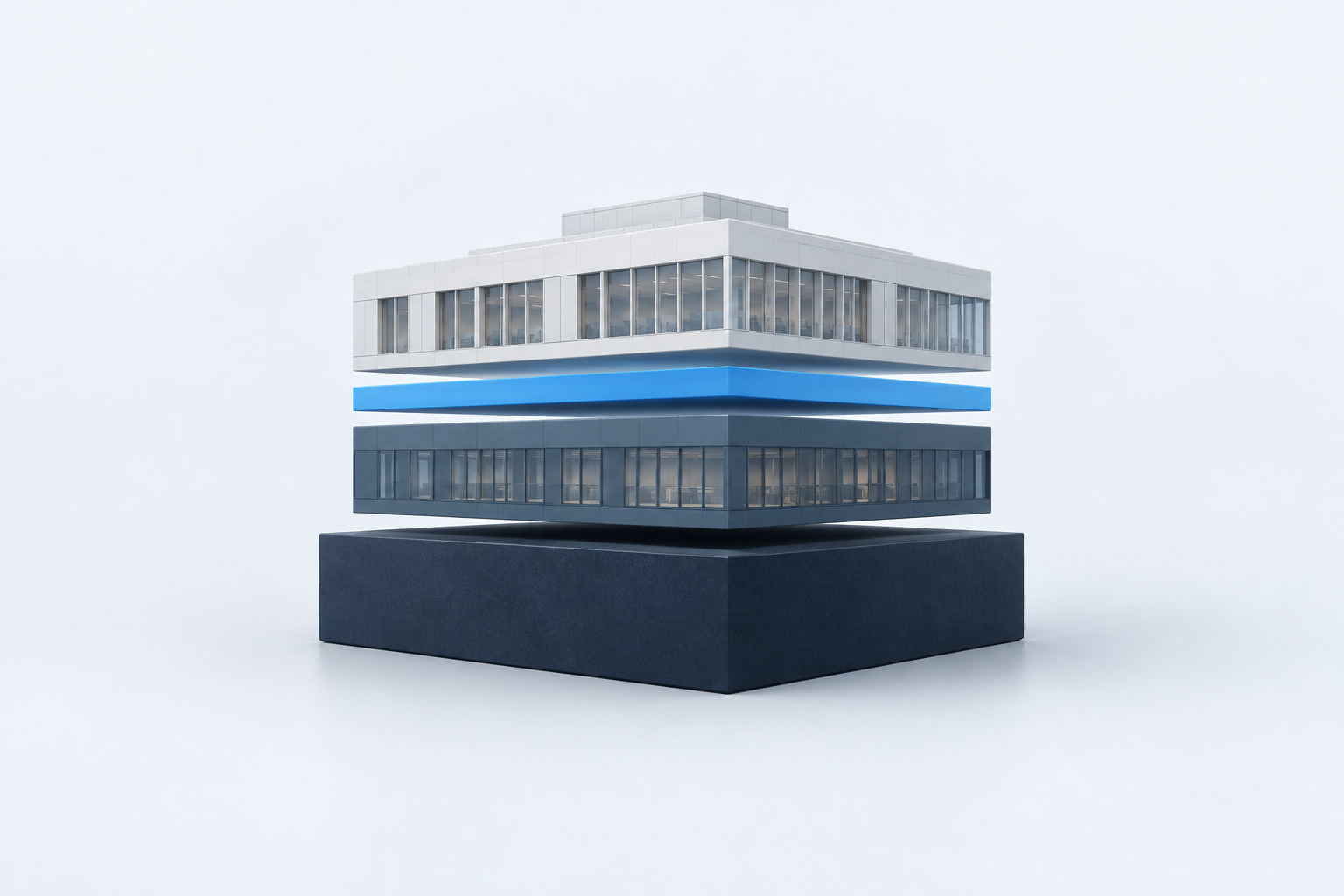
The capital stack describes how a property is financed and who gets paid first.
- Equity: Owners participate in income and appreciation after obligations are met, but equity absorbs losses before others.
- Senior secured debt: Lenders receive contractual payments and hold a priority claim backed by property. Collateral may still prove insufficient after default.
Some investors favor senior debt for its scheduled payments and priority over equity. Equity investors may take more risk for the opportunity to achieve more upside.
How Investors Are Approaching Real Assets Now
For investors looking to increase their exposure to real assets, the appeal extends beyond diversification. Real estate and infrastructure offer ownership of tangible assets whose economics can benefit from long-term demand, constrained supply and rising replacement costs.
Within real estate, investors have a growing range of ways to gain exposure. Direct ownership can provide greater control over individual properties, while REITs, private funds and other pooled vehicles can provide access to diversified portfolios and professional management. Nontraded REITs offer another option, with FINRA describing increasingly common nontraded REIT structures that price shares using estimated asset values.
The structure matters because real estate is generally better suited to patient capital than short-term trading, especially when considering transaction costs and limited liquidity. Properties take time to acquire, improve, lease and sell, while private and nontraded vehicles may also carry transaction costs and liquidity limitations. For investors increasing their allocations, the focus is therefore not simply on owning more real assets, but on finding assets with durable demand, attractive entry values and sufficient time for their underlying economics to play out.
Conclusion: Real Value in an Uncertain World
Uncertainty has always been part of investing. What changes is how much confidence investors can place in forecasts about what comes next.
Hard assets offer a different starting point. A well-located property can provide current income, serve an enduring economic need and become more difficult to replace as land, labor and construction costs rise. Its value does not depend solely on market sentiment or expectations of distant future growth.
That does not make every property a good investment. Price, leverage, location and tenant demand still matter. But in a world where expectations can change quickly, owning useful assets at an attractive basis can provide something increasingly valuable: income today, tangible value underneath it and the potential to preserve and build wealth over time.